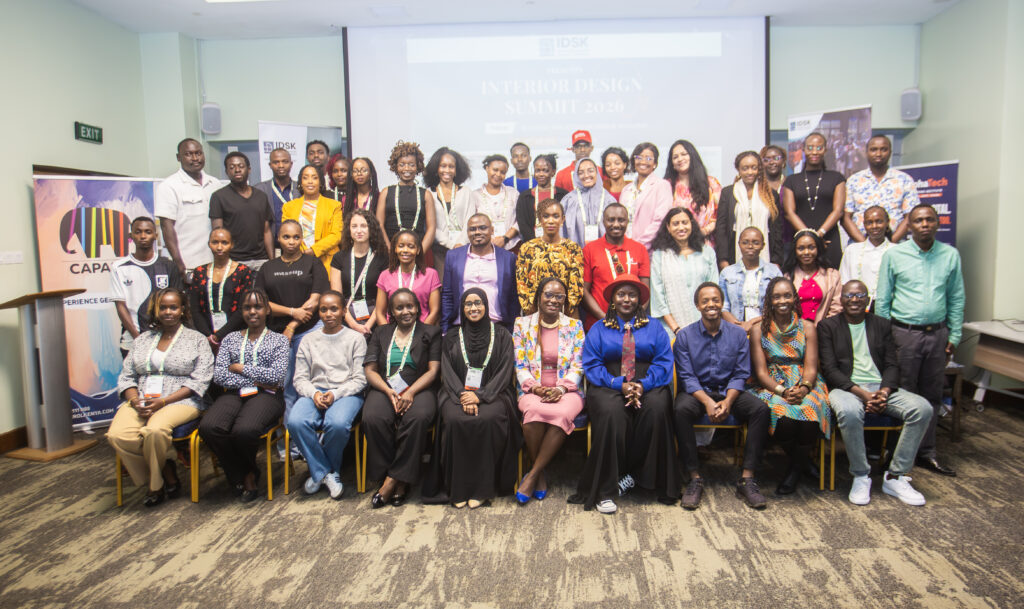

Cecilia Nakhungu Mbati, President of the Interior Design Society of Kenya (IDSK), was invited to speak to interior design students at the NIBS Ruiru Campus on Friday, 31 July 2026.
Delivered under the IDSK Industry Integration Programme (IIP), the career talk was titled “Shaping Spaces & Futures: Navigating the Modern Interior Design Industry.”
The session gave students practical insight into the changing interior design profession, the competencies required in the workplace and the different career paths available to emerging designers.
Understanding the Modern Interior Design Industry
Cecilia introduced students to key developments influencing contemporary interior design practice. These include sustainability, biophilic design, smart technology, human-centred spaces, sensory design and neuro-inclusive design.
The presentation emphasised that interior design is no longer concerned only with the appearance of a space. Designers must consider how environments function and how they affect the comfort, well-being, productivity and experiences of the people using them.
Students were encouraged to understand materials, technology and environmental responsibility while developing solutions that respond to real human needs.
Developing Practical Professional Skills
The talk explored the practical skills interior designers require to work successfully across residential, commercial, hospitality, retail, healthcare and institutional projects.
These skills include:
- Space planning and functional zoning
- Ergonomics and circulation planning
- Technical drawing and construction documentation
- Computer-aided design and 3D modelling
- Rendering and digital presentation
- Virtual and augmented reality applications
- Material and finish specification
- Understanding durability and building requirements
- Client communication and brief development
- Project coordination and professional collaboration
Cecilia highlighted the importance of combining creativity with technical accuracy. A strong design concept must also be practical, properly communicated and capable of being implemented within the available space, budget and project timeline.
Client Engagement and Professional Collaboration
The students were taken through the process of understanding a client’s needs and converting them into a clear, actionable design brief.
Successful interior design begins with listening. Designers must understand how clients live, work and interact with their surroundings before proposing a solution. They must also manage expectations, explain design decisions and communicate ideas through drawings, mood boards, material samples and visual presentations.
The session further highlighted the collaborative nature of interior design. Interior designers regularly work with architects, engineers, mechanical and electrical contractors, lighting consultants, artisans, suppliers and other project professionals.
The ability to communicate and coordinate effectively is therefore as important as creative ability.
Building a Strong Interior Design Portfolio
Cecilia also discussed what design firms and potential clients look for in a student or emerging designer’s portfolio.
Students were advised to present more than completed renders. A strong portfolio should demonstrate the designer’s thinking and problem-solving process through research, sketches, space plans, mood boards, technical drawings, material selections and final visualisations.
Project descriptions should clearly explain the design challenge, the proposed solution and the intended impact on the people using the space.
Career and Entrepreneurship Opportunities
The session introduced students to several possible career pathways within the interior design industry.
Graduates may join interior design studios, architectural practices, property companies or multidisciplinary consultancies as junior designers, space planners, visualisers or project coordinators. Others may build independent practices, offer specialised design services or establish studios and product businesses.
Students were also introduced to the realities of the profession, including tight deadlines, budget limitations, supply-chain changes and the need to manage client feedback. Adaptability, resilience and continuous learning were identified as essential professional qualities.
Bridging Education and Industry Through IIP
The NIBS Ruiru engagement reflects the purpose of the IDSK Industry Integration Programme: connecting design education with professional practice.
IIP provides students and emerging designers with mentorship, industry exposure, practical learning and career preparation. It also strengthens collaboration between academic institutions and the professionals, firms and businesses shaping Kenya’s interior design sector.
Through engagements of this kind, IDSK is helping the next generation of designers enter the industry with stronger skills, greater confidence and a clearer understanding of professional practice.